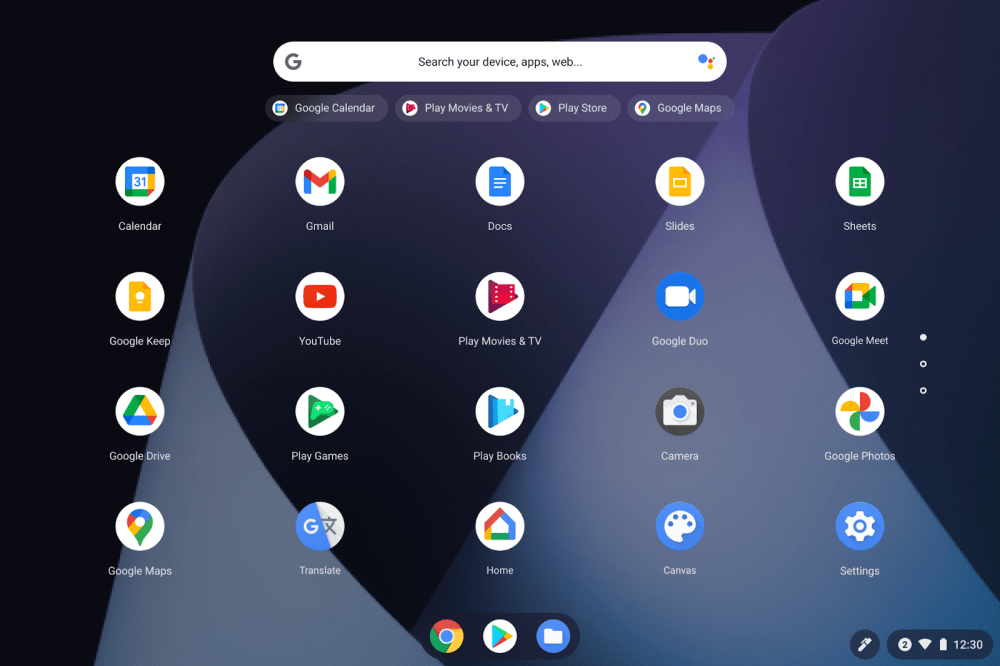
Like Chat, Google Meet now has a Progressive Web App (PWA) that allows for quick dock, taskbar, or launcher access.
The Google Meet PWA is meant to simply provide users with an icon that launches the same landing page but with a blue app bar up top instead of a tab strip. The date and time are conveniently listed above alongside settings. Your Google avatar remains in the top-right next to the launcher that opens apps back in your main browsing window.
This Progressive Web Application (PWA) has all the same features as Google Meet on the web, but as a standalone app it’s easier to find and use, and it streamlines your workflow by eliminating the need to switch between tabs.
Elsewhere on the page is a prominent “New meeting” button with three options for starting a call and the text field to enter a meeting code.
Like other PWAs, you must be running Chrome 73 or newer with support for macOS, Windows, Linux, and Chrome OS. It’s widely rolled out today with the “Install” prompt appearing at the right of your address bar.
There will also be an offer to try the Google Meet web app in the upper right-hand corner of the main Google Meet opening page
It’s available to all Workspace customers, as well as personal Google Accounts.
If you’re invested in the story of Master Chief, Cortana, and the fate of the Halo universe, you might want to keep your head down and start muting some keywords on social media until Halo Infinite arrives later this year — because vast spoilers for the game’s entire story are now floating around on the internet.
Note: we’ll be keeping this post spoiler-free, though.
Leaks like this are painful for the dev team and can ruin the campaign experience for everyone. So please, keep you eyes peeled for spoilers and don't spread them if you see them.❤️ 2/2
As far as we can tell, that’s no exaggeration — we found a plaintext dump on the web with over 800 strings of text that appear to be from Halo Infinite’s campaign. They seem to describe both your in-game objectives, and basic descriptions of the plot, all the way through the end of the story. (At least one of them literally describes a plot twist.)
We’re not linking to the strings, though they’re not terribly hard to find if you really want to spoil the campaign. But if, instead, you’re trying to keep spoilers away, might we suggest our guide on how to mute words on Twitter?
In lighter Halo Infinite news, developer 343 Industries recently revealed you’ll finally have a “drop weapon” button, hopefully leading to fewer randos teamkilling you just to claim your sniper rifle.
Twitter has laid out plans for a bug bounty competition with a difference. This time around, instead of paying researchers who uncover security issues, Twitter will reward those who find as-yet undiscovered examples of bias in its image-cropping algorithm.
Back in April, Twitter said it would study potential “unintentional harms” created by its algorithms, beginning with its image-cropping one. It started using the algorithm in 2018 in an attempt to focus on the most interesting parts of images in previews. Some users criticized how Twitter handled automated cropping, claiming that the algorithm tends to focus on lighter-skinned people in photos.
"In May, we shared our approach to identifying bias in our saliency algorithm (also known as our image cropping algorithm), and we made our code available for others to reproduce our work," Twitter wrote in a blog post. "We want to take this work a step further by inviting and incentivizing the community to help identify potential harms of this algorithm beyond what we identified ourselves."
Twitter says this is the "industry’s first algorithmic bias bounty competition" and it's offering cash prizes of up to $3,500. Rumman Chowdhury, director of Twitter's Machine Learning Ethics, Transparency and Accountability team, wrote in a tweet that the company is running the contest "because we believe people should be rewarded for identifying these issues, and we can’t solve these challenges alone." The winners will be announced at a Twitter-hosted DEF CON AI Village workshop on August 8th.
All products recommended by Engadget are selected by our editorial team, independent of our parent company. Some of our stories include affiliate links. If you buy something through one of these links, we may earn an affiliate commission.
When it comes to discrete graphics cards for PCs, it's currently a two-horse race between NVIDIA and AMD. NVIDIA's GeForce RTX 30 Series is going up against the Radeon RX 6000 Series in the current-generation discrete GPU wars. However, Intel is looking to barge in on the fireworks with its DG2 family of discrete graphics cards based on the Xe-HPG GPU.
According to a new rumor making the rounds on the internet, Intel will launch DG2 early next year at CES 2022. However, the massive electronic show, which will be in-person again for 2022 -- is still roughly five months away. So there's still the possibility that Intel could officially announce DG2 later this year -- perhaps at the upcoming event on October 27th -- with availability set for June 2022.
According to recent rumors, the DG2 lineup will be available with up to 512 execution units, with performance that could land somewhere in between NVIDIA's GeForce RTX 3070 and GeForce RTX 3080. In other words, we're talking about performance that would line up perfectly with the recently launched GeForce RTX 3070 Ti.
The GeForce RTX 3070 Ti has an MSRP of $599, but that price point is quite laughable considering that you can't find one anywhere at that price. So instead, you must be prepared to pay a few hundred bucks (at least) over MSRP to get your hands on one from a third-party marketplace like eBay. We currently see new GeForce RTX 3070 Ti cards selling for around $1,200, twice its MSRP.
If Intel can match the GeForce RTX 3070 Ti's performance while coming in at around $599 or less, it could have a hit on its hands. However, that also means that Intel will likely be subject to the same insane pricing that afflicts current NVIDIA and AMD cards if it can't get a handle on chip production.
The front looks like every other smartphone on Earth.
Huawei
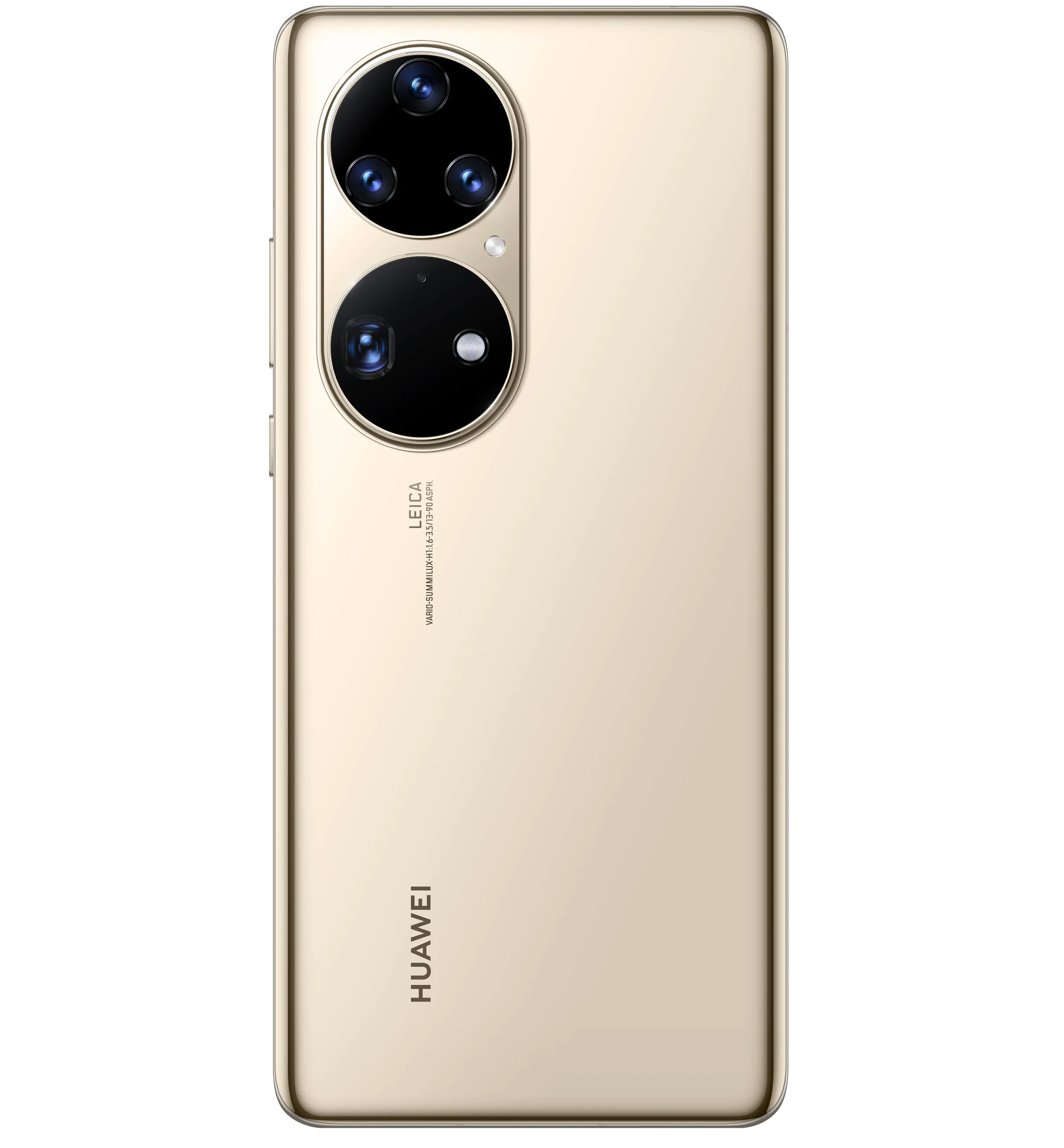
The back.
Huawei
This is a huge camera bump. That's a main camera, a black and white camera, and a wide-angle camera on the top. The rectangular lens at the bottom is a periscope zoom camera.
Huawei
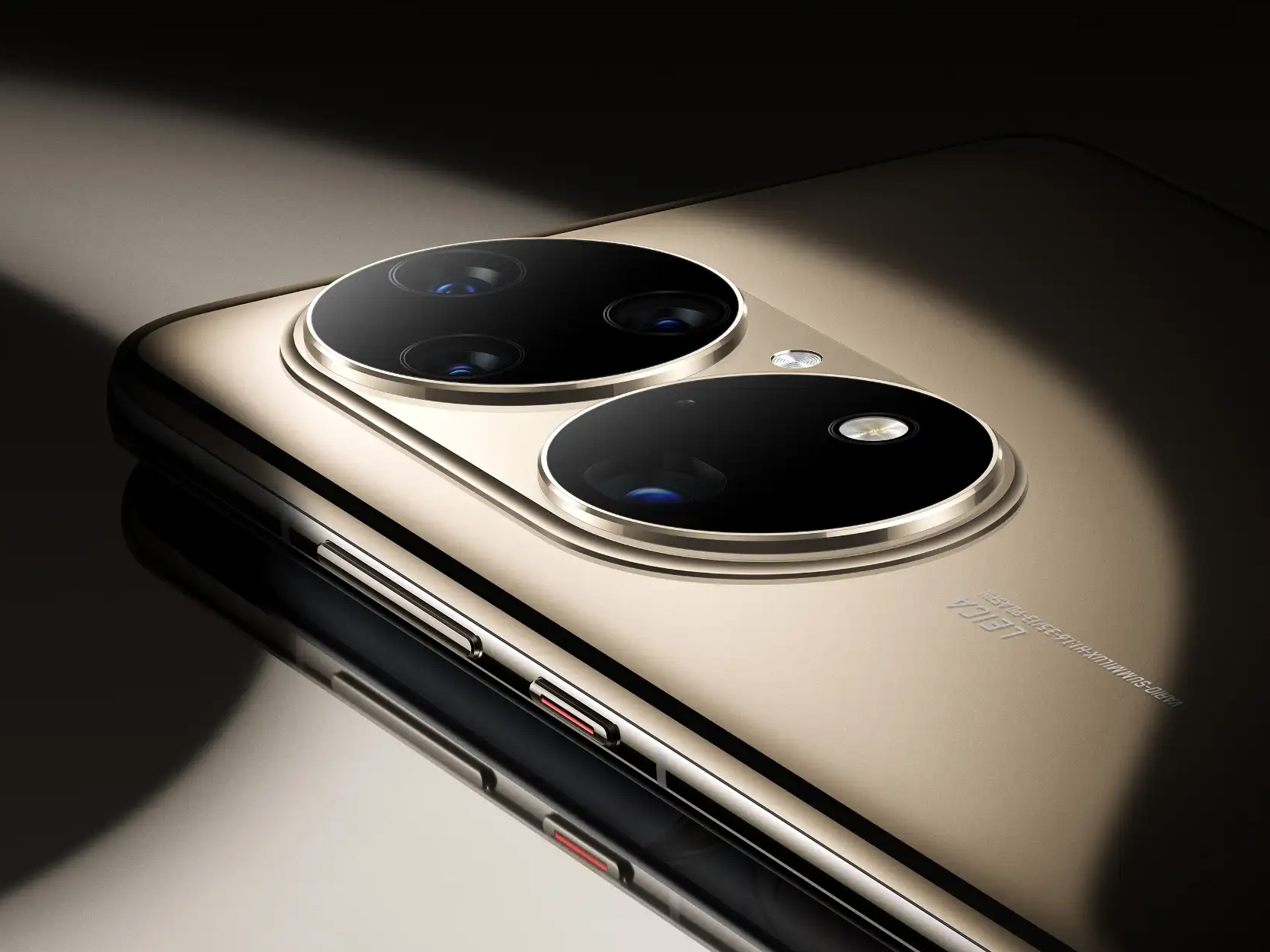
Here's a good look at the bump height and the power and volume buttons.
Huawei
You can make out the bottom edge in this picture, which shows the USB-C port and speaker.
Huawei
The screen is curved.
Huawei
You can make out the prices and sizes here, even if you don't read Chinese.
Huawei
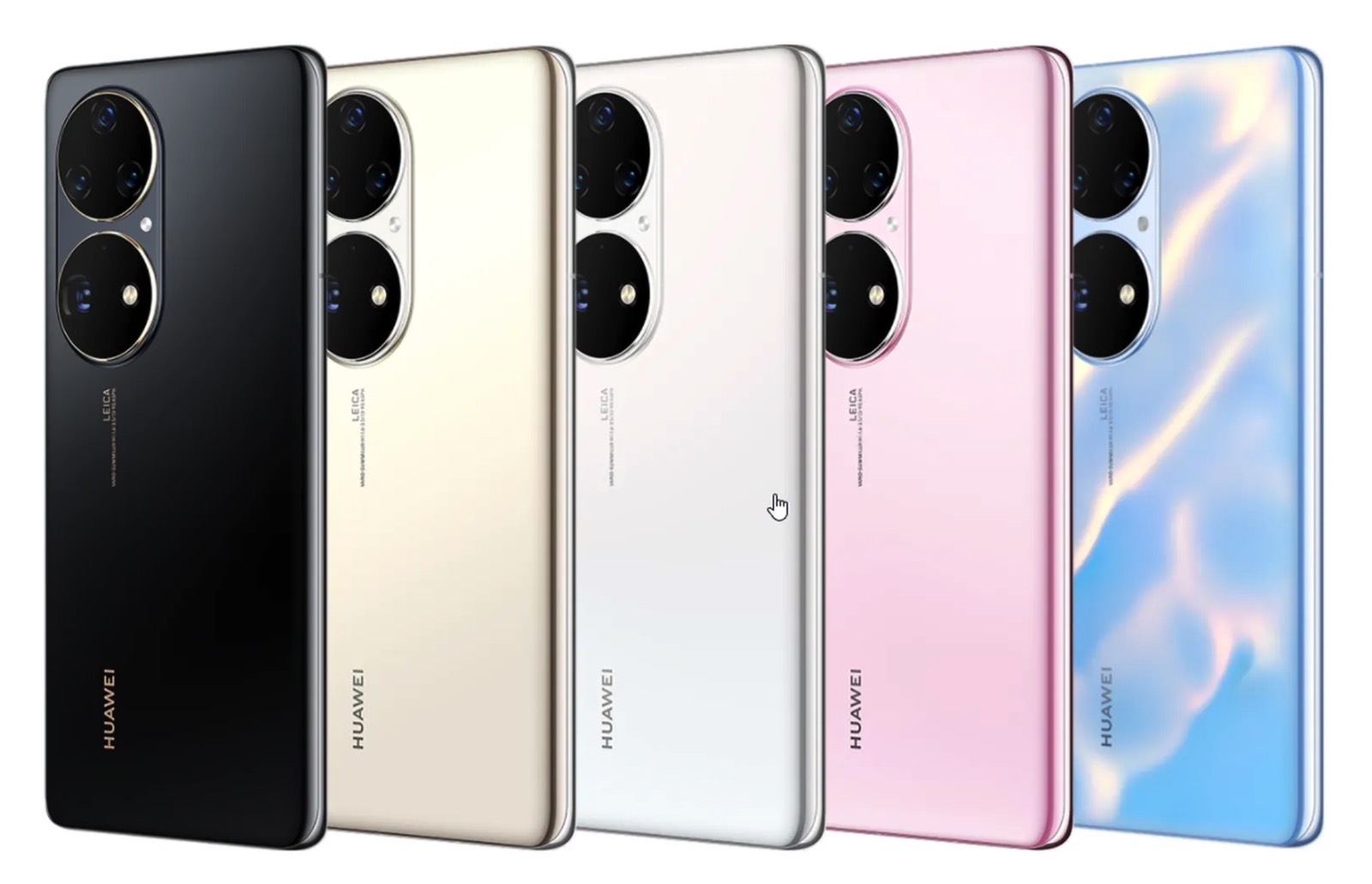
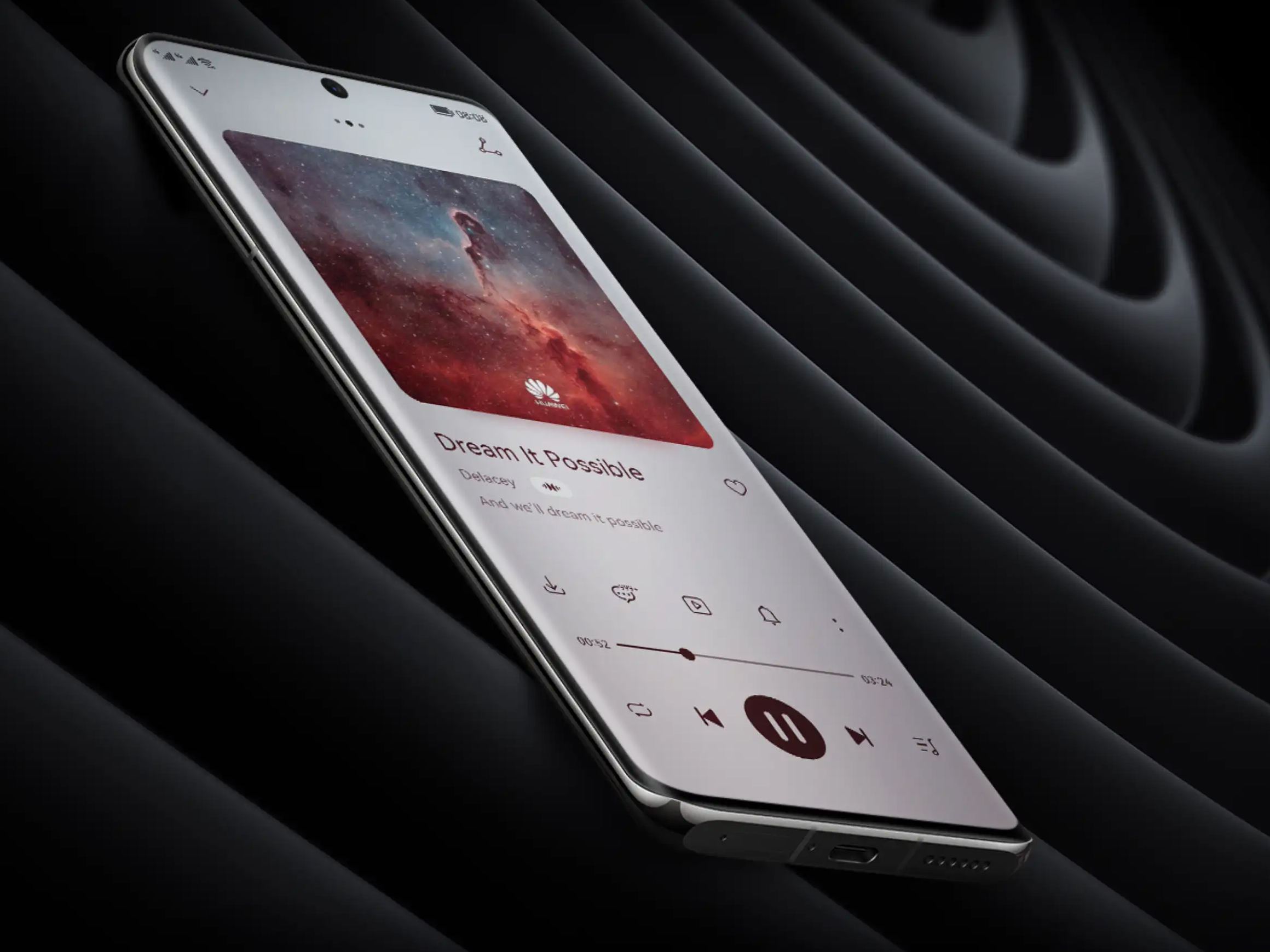
Despite facing down a global chip shortage, a US export ban, and plummeting market share, Huawei is still plowing ahead and announcing its next flagship smartphone, the Huawei P50 Pro. The phone, which was teased back in June, is the company's first smartphone launching with HarmonyOS, Huawei's in-house operating system (though it's just a fork of Android).
Huawei is weathering several storms as best it can, but these storms are leading to a lot of wild product decisions with the P50 Pro. Huawei devices are usually based on the company's in-house "Kirin" SoCs, made by subsidiary HiSilicon. While the initial versions of the phones will use the 5 nm Kirin 9000 SoC, once the supply on those runs out, Huawei says it will switch to the Qualcomm Snapdragon 888 SoC. But wait—didn't the US Government ban companies from exporting US-origin goods to Huawei?
It did, but Qualcomm was granted a license to sell chips to Huawei back in November 2020.
Qualcomm's license only covers 4G products, which brings us to the next major oddity of the P50: it doesn't support 5G. Huawei Consumer Division CEO Richard Yu blamed the US for this limitation during the presentation, saying (via the official translation), "Because of the four rounds of US restrictions over the past two years or so, 5G phones are beyond our reach." The lack of 5G isn't really a big deal for consumers, who rarely see any practical benefits from it, but it's a big deal for the 5G-obsessed smartphone manufacturers and cell carriers.
The design features a big, dual-circle camera bump, which is kind of strange-looking. Hopefully, we'll someday get similar designs with massive camera sensors behind each circle, but Huawei is filling them with several smaller cameras and sensors, going for... a faux-big-camera look? The Pro model features a 50 MP main camera, a 40 MP black-and-white camera (really?), and a 13 MP ultra-wide camera in the top circle. The bottom circle gets a 64 MP 3.5x telephoto (with a 200x digital zoom, which must make pictures look like mud), an LED flash, and a microphone.
There's also the issue of the operating system, as this is the first smartphone Huawei is launching with HarmonyOS. Huawei executives pitch HarmonyOS as a fully in-house product and have said it is "not a copy of Android." Once you actually get your hands on the OS, though, you'll find it's just an Android fork, with Huawei services replacing the Google services. Since Huawei has been replacing Google services forever in China (where Google Play isn't available) and was later forced to do this internationally thanks to the export ban, there isn't actually any serious difference between the company's Android skin, EMUI, and its "in-house" OS, HarmonyOS. HarmonyOS 2 is based on a newer version of Android compared to EMUI, but other than that, it's just a name change.
Back in June, Huawei announced a plan to update 100 older Huawei models in China from Android to HarmonyOS (a move only possible because HarmonyOS is just a newer version of Android), and the P50 press release says that "more than 40 million users" have taken the company up on that offer so far.
Besides the above, we have some pretty normal specs: a 6.6-inch, 120 Hz, 2700×1228 OLED display; 8GB of RAM; 128GB of storage; and a 4360 mAh battery. In China, the phone starts at $927 (CNY 5,988) for the 128GB version, with sales beginning today. There's no word on the phone being sold outside of China, and with Huawei facing all sorts of supply problems, it would not be surprising to hear that availability is limited.
Over the past few months, Apple has seemingly taken a much harder stance against online leakers, sending out cease and desist letters to social media accounts that post assorted rumors that quickly spread around the web. Now Apple has a message to go along with it: you’re not harming us, you’re harming the cases.
In a cease-and-desist letter obtained by Motherboard, Apple’s law firm in China went after a leaker who had “advertised stolen iPhone prototypes on social media.” In the letter, Apple said the leaker has “disclosed without authorization a large amount of information related to Apple’s unreleased and rumored products, which has constituted a deliberate infringement of Apple’s trade secrets.”
According to Motherboard, Apple wrote that leaks harm customers by taking away the element of surprise, but also have an adverse effect on case makers and buyers. Apple told the leaker that “third-party accessory manufacturers may develop and sell mobile phone cases and other accessories that are not actually compatible with the unreleased products.”
That’s a new avenue in the fight against leakers. While other phone makers work closely with big-name case makers to ensure availability at launch, Apple doesn’t often supply specs until after launch, leaving case makers in a tight spot. That’s why many of them follow rumors as closely as we do and make prototypes and actual shipping units based on leaks.
We’ve seen numerous case makers over the years trot out iPhone cases weeks and months before they arrive on the market. Occasionally the first batch doesn’t quite fit the actual product or has the wrong name on the outside, and Apple wants to stop that in the interest of quality control. Since Apple can’t actually prevent a case maker from launching a new product based on a leak, it’s appealing to the source to stop spreading information.
“It is obvious that when the unpublished information about the design and performance of Apple’s products is kept confidential, it has actual and potential commercial value,” Apple wrote.
Of course, we already know basically everything about the iPhone 13 and have already gotten some info about the iPhone 14. The rumor market is robust for giant companies like Apple and Samsung and it’s unlikely that these efforts will have a major impact on the reporting and dissemination of rumors anytime soon. But if you buy an iPhone 13 case that doesn’t quite fit when you pop your iPhone into it, don’t blame Apple. Blame the leakers.
Note: When you purchase something after clicking links in our articles, we may earn a small commission. Read ouraffiliate link policyfor more details.
Michael Simon has been covering Apple since the iPod was the iWalk. His obsession with technology goes back to his first PC—the IBM Thinkpad with the lift-up keyboard for swapping out the drive. He's still waiting for that to come back in style tbh.
A few months ago, Google said that it was working on improving the way you discover and install apps on Wear OS watches, by allowing you to browse the watch's Play Store from the larger screen on your smartphone. At the time, we thought this would only roll out once the all-new Wear OS revamp was out, but it seems this isn't the case. Two of our team members are already seeing these changes in the Play Store on their phones, and we can say with certainty: this is the easiest way to find and send apps to your watch.
There are three distinct ways to find apps for your watch, at least for those who already have the functionality in the Play Store — it's currently rolling out via a server-side switch. The first one is through a new section for watch-compatible apps under Apps >Categories > Wear OS. This opens up a special page where you can find curated apps and watch faces for your wearable. Browsing here is all about discovery, so you can find the most popular apps and watch face styles downloaded by other users.
But if you're looking for a more specific app type, you can simply start searching for a keyword then use the new "watch" or "watch faces" filters on top to narrow down the results and only show Wear OS-compatible options.
Finally, if/when you're sure about the app you want to install, simply open its listing in the Play Store and you'll see two checkboxes below the Install button. One is for your phone, the other for your watch. That way you can choose whether to install the app on both or either.
It's really as simple as this, and it's a much better experience than squinting and scrolling through endless lists, screenshots, and reviews on your tiny watch screen. It's also more convenient and readily available than the Play Store website, where you could already do this, but had to be in front of a desktop to use.